History is often presented as an unquestionable narrative. Dates, events, and figures are arranged into a structured narrative that feels complete and authoritative. From classrooms to textbooks, we are taught to accept these accounts as the definitive record of what happened. But history, at its core, is not just a collection of facts. It is a story shaped by interpretation, perspective, and, at times, omission.
Every historical prescription passes through layers of processes. Certain events are emphasized, while others are minimized or ignored. Victors document their triumphs. Institutions preserve what aligns with their values. Over time, this process can create a version of history that feels coherent, yet may not fully represent the complexity of reality.
When we begin to inquire what we were taught, it is not about dismissing everything outright. It is about recognizing that knowledge evolves. New evidence emerges. Perspectives shift. What was once accepted without question can later be reconsidered. This process is not a flaw in understanding. It is a sign of intellectual growth.
The challenge lies in navigating that space between trust and skepticism. Blind acceptance can limit inquiry, but constant doubt can lead to confusion. The balance comes from asking better questions. Who recorded this event? What sources were used? What context might be missing?
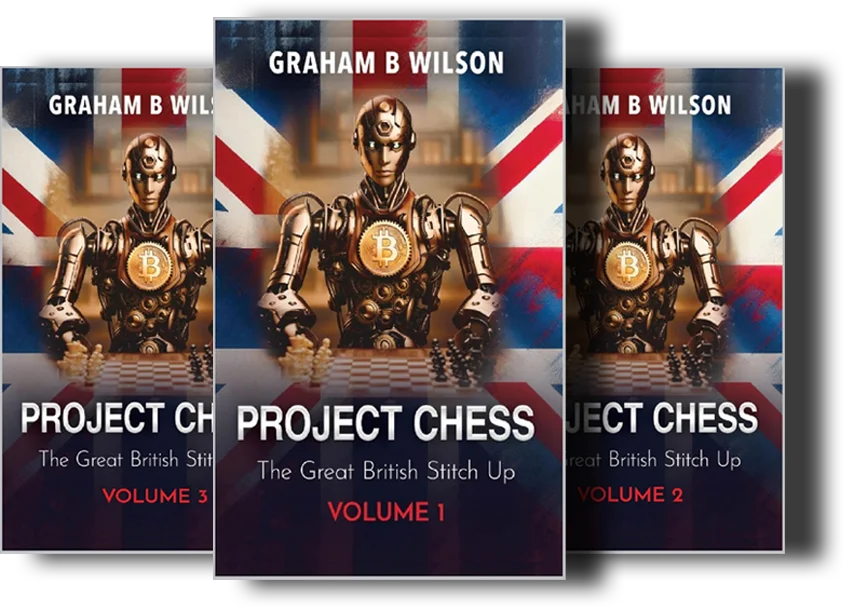
Project Chess: The Great British Stitch Up, Volume One by Graham B Wilson enters this space with bold intent. The book does not treat history as fixed. Instead, it reimagines it through a lens that mixes established narratives with alternative interpretations. It invites readers to step outside conventional frameworks and consider possibilities that are rarely discussed in traditional settings.
What makes this approach compelling is not simply the content, but the mindset it encourages. It challenges readers to examine how easily narratives can be accepted when presented with authority. It also highlights how quickly unconventional ideas can be dismissed without exploration.
Throughout the book, historical references are not just revisited. They are reframed. Events are connected in unexpected ways. Mythology, technology, and human behavior are woven together to suggest that history may hold layers that remain unexplored. Whether one agrees with these interpretations or not, the experience pushes the reader to think beyond surface-level understanding.
When we consider the possibility that history might not be exactly as we were taught, we begin to engage more actively with knowledge. We move from passive acceptance to critical evaluation. We start to see history not as a finished product, but as an ongoing conversation.
That conversation is essential in a world where information is constantly evolving. The ability to question, analyze, and reinterpret is what allows understanding to deepen over time.
Project Chess: The Great British Stitch Up, Volume One stands as an invitation to that process. It does not ask readers to abandon what they know. It asks them to look again, to think harder, and to consider that beneath familiar narratives, there may be more waiting to be uncovered.
And once that possibility is recognized, history no longer feels distant or fixed. It becomes dynamic, open to exploration, and far more intriguing than we were ever led to believe.
The book is available on https://www.amazon.com/dp/B0G4VFBH6Z.