Control is not always loud or evident. It does not always arrive through force or direct command. In many cases, it operates quietly, woven into routines, systems, and expectations that feel ordinary. This is what makes the question so compelling. If control exists in subtle forms, how often do we recognize it?
Modern society is built on framework. Laws, institutions, education, media, and technology all play a role in shaping behavior. These systems are necessary. They provide order, stability, and coordination. Without them, society would struggle to function. Yet within that structure lies an important tension. Where does organization end and control begin?
Consider how information is delivered. News cycles, social platforms, and algorithms determine what is seen and what is overlooked. This does not necessarily imply intention, but it does influence perception. The repetition of certain ideas can make them feel undeniable, while the absence of others can make them seem irrelevant or nonexistent. Over time, this shapes collective understanding without requiring direct enforcement.
Behavior is also guided through expectation. Social norms, cultural values, and professional standards create invisible boundaries. People adjust not because they are forced, but because they want to belong, succeed, or avoid conflict. This form of influence is subtle, yet powerful. It encourages alignment without the need for overt control.
Technology has added another layer to this dynamic. Data is collected, analyzed, and used to predict patterns. Systems can await preferences, guide decisions, and even influence choices. Convenience becomes the gateway. The easier something feels, the less it is questioned. In this way, control can exist not as restriction, but as direction.
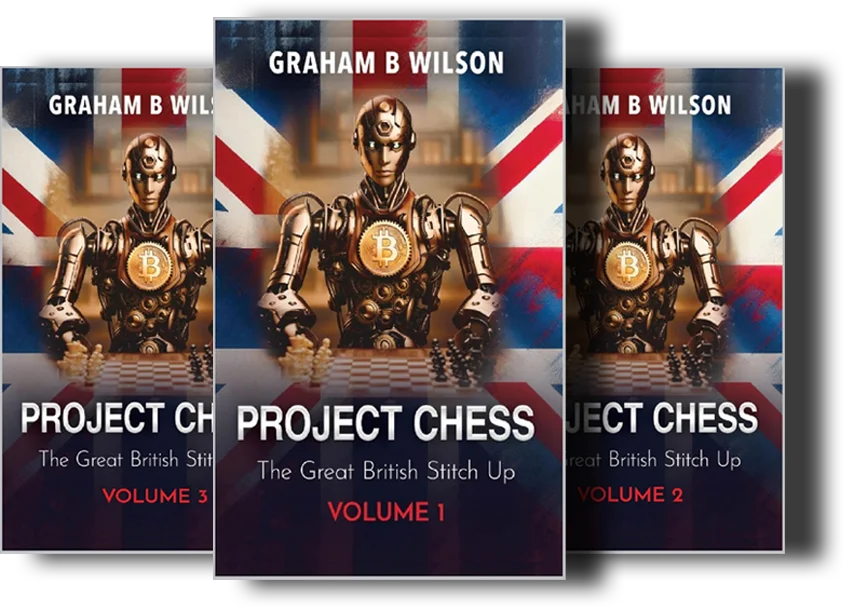
Project Chess: The Great British Stitch Up, Volume One by Graham B Wilson explores this idea with intensity. The narrative suggests a world where control is not only present but deeply embedded within unseen systems. It presents a perspective where influence extends beyond the visible, operating through networks, perception, and psychological pressure.
What makes the book stand out is how it captures the feeling of being affected by forces that are difficult to define. It places the reader inside that uncertainty, where the line between external influence and internal thought becomes blurred. Whether taken as literal interpretation, the experience raises important questions about autonomy and awareness.
The idea that society may be more controlled than we realize is not entirely new. Philosophers, sociologists, and writers have explored it for generations. What changes is the context. As systems become more complex, the forms of influence evolve. Control no longer needs to be imposed directly. It can emerge through design, repetition, and normalization.
This does not mean individuals are powerless. Awareness itself is a form of resistance. The ability to question, to pause, and to reflect creates space for independent thought. Recognizing influence does not eliminate it, but it allows for more conscious engagement with the world.
Project Chess: The Great British Stitch Up, Volume One challenges readers to sit with that question. It does not offer simple conclusions. Instead, it opens a door to deeper reflection on how systems operate, how perceptions are shaped, and how easily control can blend into the background of everyday life.
Once that perspective is considered, it becomes difficult to ignore. The world may look the same, but the way it is understood begins to shift.
The book is available on https://www.amazon.com/dp/B0G4VFBH6Z.