Project Chess offers a chilling examination of how military strategy has evolved from the Cold War to a world dominated by digital warfare. The novel delves into the intersection of technology, power, and strategy, showcasing how traditional forms of combat have been replaced by a more insidious and invisible enemy one that operates through the very networks that connect and empower society.
The Cold War, marked by intense geopolitical tension and the threat of nuclear annihilation, was the last era where global conflicts were predominantly fought with weapons and ideologies. In Project Chess, this traditional form of warfare gives way to something far more sophisticated and, perhaps, more dangerous: a digital battleground where control over information becomes the key to victory. The novel explores how, in this new age of conflict, those in power no longer rely on armies alone but on the unseen forces that run the world’s communication, data, and technological infrastructures.
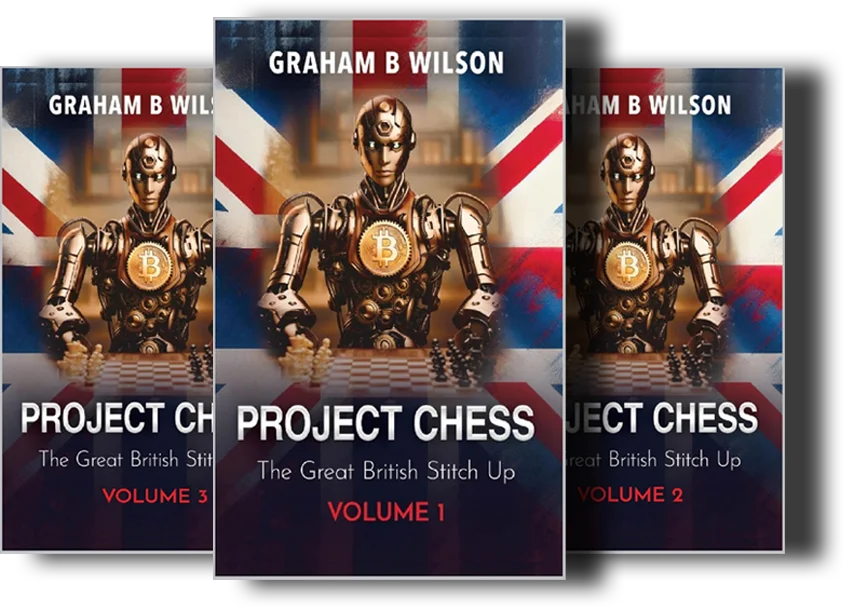
The novel reflects the shift from a Cold War mindset, where military strength and diplomacy determined the outcome of international relations, to a digital era in which the primary weapons are information and influence. In Project Chess, the characters are caught in a world where wars are fought through cyberspace where strategic control of data, surveillance, and digital networks can destabilize governments and disrupt economies. This is a war where the battlefield is no longer defined by borders but by the reach of technology, and the winner is the one who can control the flow of information.
A central theme in the book is the idea of digital espionage, a form of warfare that far surpasses the capabilities of traditional intelligence gathering. In the Cold War, espionage was about stealing secrets, listening to communications, and monitoring enemy movements. In Project Chess, espionage takes on a new form, using digital tools to infiltrate systems, manipulate data, and control the narrative without ever stepping onto a physical battlefield. The rise of artificial intelligence and machine learning in the story suggests that, in the digital age, the traditional roles of spies and military strategists are being replaced by algorithms and cyber-attacks.
The novel also explores how military power has become decentralized in the digital age. Instead of relying solely on national armies or large institutions, Project Chess presents a world where shadow organizations and rogue actors have the power to wield significant influence. These groups operate outside the traditional command structures, using technology to influence global events from behind the scenes. This decentralization of power creates a dangerous, unpredictable world where actions can be taken without warning and with devastating consequences. The story shows how this shift in military strategy challenges traditional notions of sovereignty and national security.
In many ways, Project Chess serves as a mirror to our own world, where the lines between military strategy and corporate power have become increasingly blurred. The novel demonstrates how global corporations, with their access to vast amounts of data and cutting-edge technology, are not only influencing markets but also shaping international relations. These companies, much like the forces in the book, become key players in the modern digital warfare landscape, able to sway public opinion, manipulate governments, and disrupt economies with the click of a button.
The evolution of military strategy in Project Chess reflects the growing concerns of today’s world, where cyber-attacks, misinformation campaigns, and digital manipulation have become commonplace. It raises important questions about the ethics of digital warfare and the responsibilities of those who wield this new form of power. The novel asks: In a world where war can be declared without a single shot fired, where do we draw the line between defense and aggression? Who is responsible when the lines between enemy and ally become indistinguishable in cyberspace?
For readers intrigued by the evolving nature of warfare, Project Chess offers a compelling exploration of how the digital age has reshaped the strategies of conflict. The novel paints a picture of a future where the Cold War is not just a relic of the past but a foundational moment in the rise of a new kind of warfare one fought not on battlefields but in the realm of information, technology, and control. As we continue to navigate our increasingly connected world, Project Chess is a stark reminder that the weapons of tomorrow are already in our hands.
The book is available on https://www.amazon.com/dp/B0G4VFBH6Z.